Montreal Balcony Safety: Is Your Balcony Safe?

Montreal is a city defined by its outdoor living. From the iconic winding staircases of the Plateau to the expansive duplex porches of Verdun and the West Island, our balconies, porches, and back decks are central to our local lifestyle.

Playwright David Fennario famously captured this cultural phenomenon in his masterpiece Balconville, alluding to how thousands of Montrealers retreat to these elevated outdoor platforms to escape the summer heat and connect with their neighbors.

However, when these spaces are not maintained, structural problems can worsen over time. Balcony collapses and serious balcony defects have been reported in Montreal and elsewhere in Canada over the years. Whether the concern comes from poor original construction, aging materials, or long-term neglect, a compromised balcony can create a serious safety concern for occupants, visitors, and children.

As we head into the peak outdoor season, Mose Home Inspection Services has put together this guide to help you spot visible warning signs, understand common balcony risks, and identify conditions that may warrant further review under current Quebec safety standards.
The Quebec Climate vs. Structural Integrity

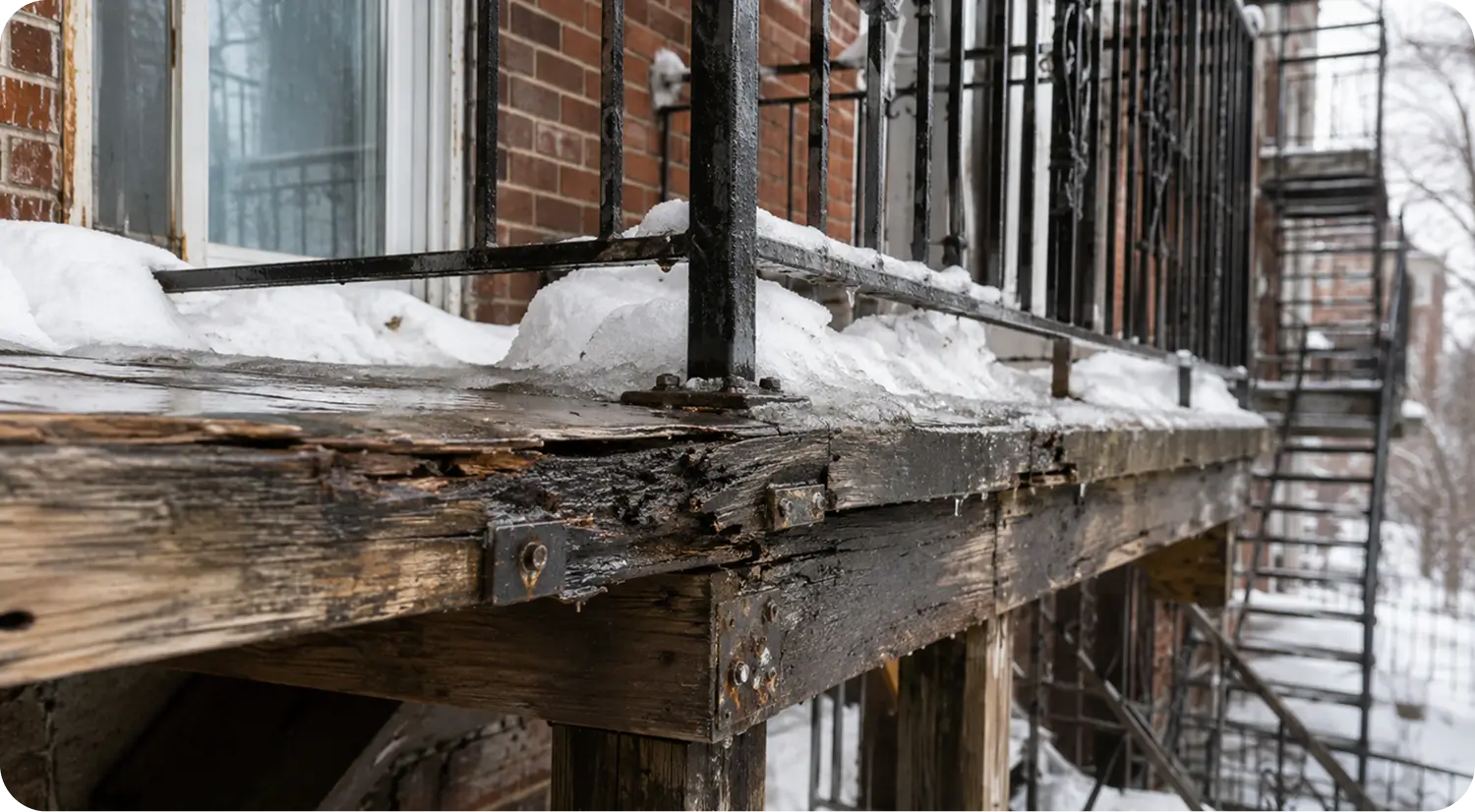
Quebec winters present a distinct challenge for elevated outdoor structures. The combination of heavy snow loads, chemical melting agents, and relentless spring freeze-thaw cycles subjects balcony framing to extreme stress.
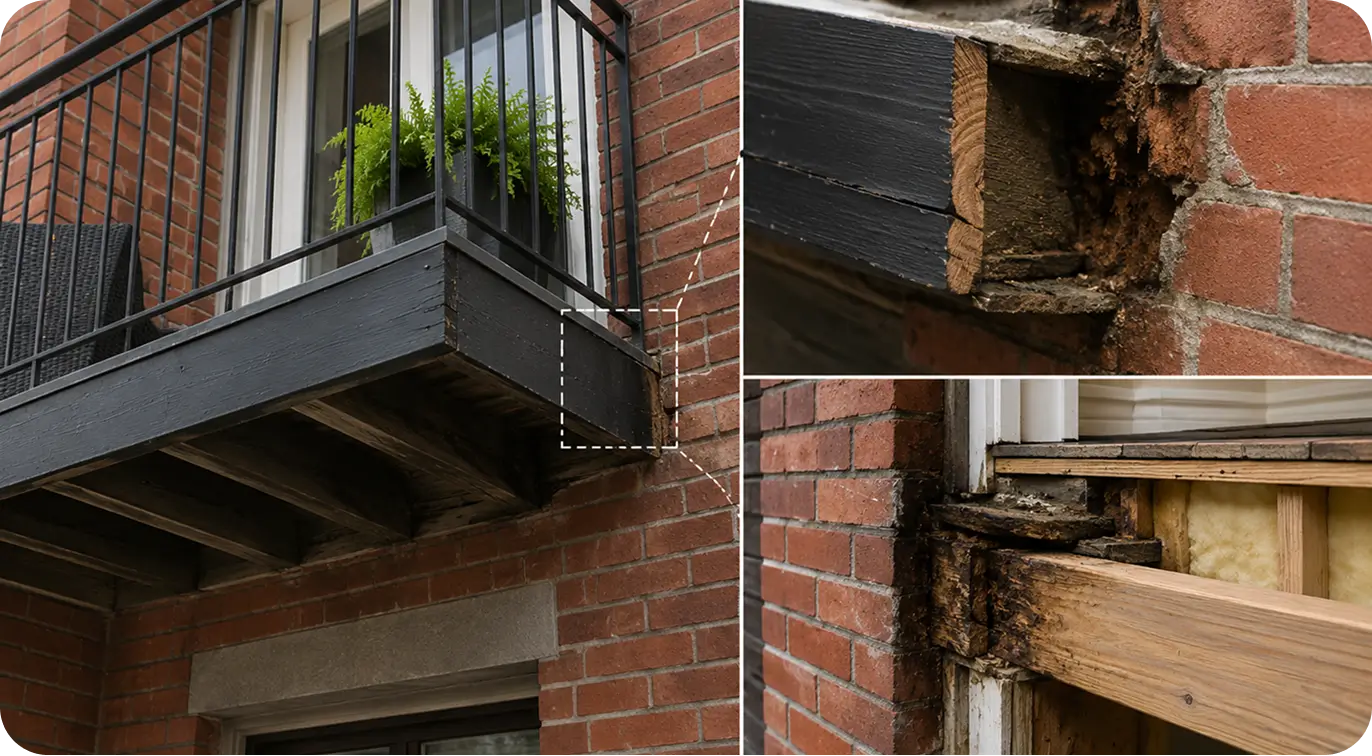
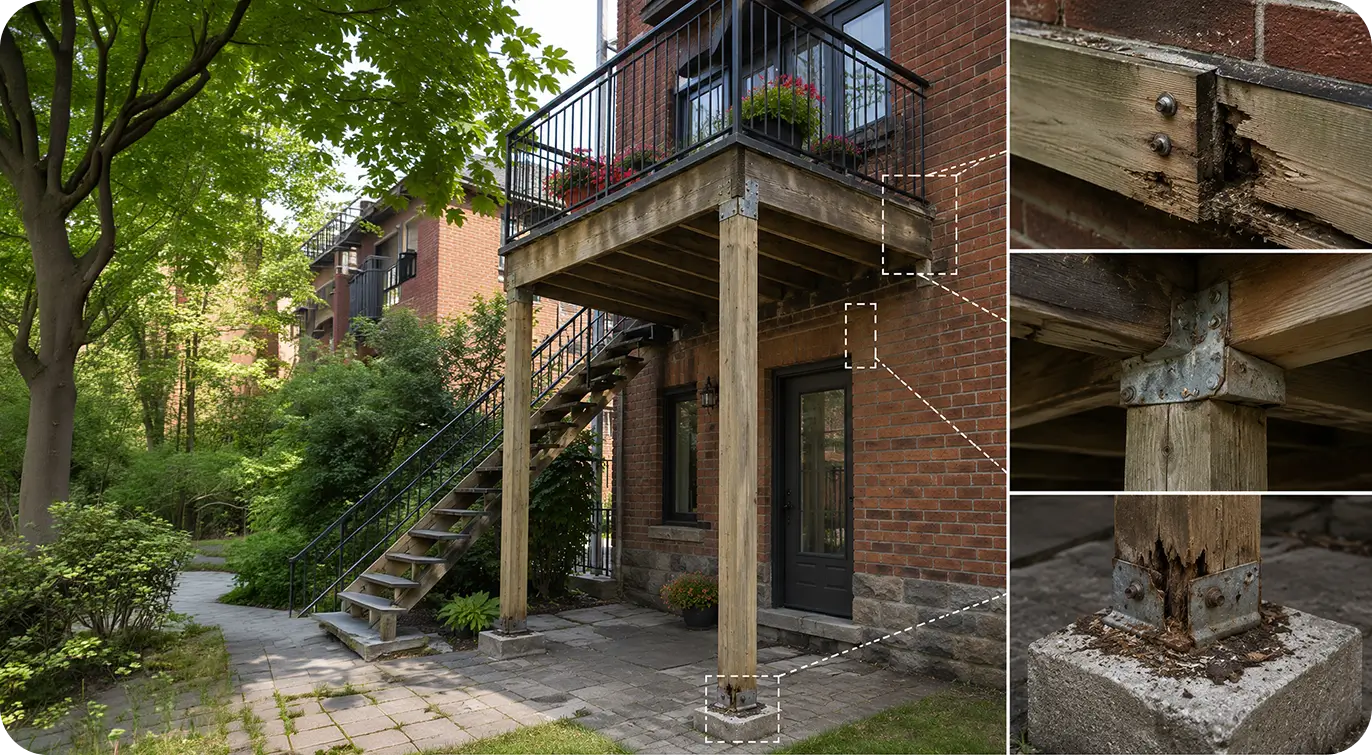
The Weight Accumulation Factor:

Allowing massive mounds of heavy, wet snow to sit on your balcony month after month places immense structural strain on its connection points.

The Moisture Trap:

As winter snow slowly thaws each spring, water creeps into microscopic fissures in wood or iron framing. Without adequate ventilation immediately beneath the balcony floorboards, trapped moisture accelerates structural wood rot and oxidizes iron fasteners, typically degrading the structure from the outer edges inward.

Understanding Balcony Support Mechanics

Montreal properties use two main balcony designs, each with its own structural vulnerabilities. A balcony inspection should generally consider how the platform transfers weight back to the building, where visible and accessible.

1. Cantilevered Balconies

Loose, sagging, or damaged support beams, cracked structural planking, or unstable handrails can indicate that the ledger connection or footings may need attention. A slight sway or noticeable bounce when multiple people stand on the deck may suggest the framing lacks adequate diagonal bracing or anchor capacity.

2. Post-Supported Columns

These platforms are affixed to the side of the building and feature vertical support columns holding up the outer framework from the ground below. These systems may present safety concerns if the ledger board or support connections are poorly secured, deteriorated, or not visible for proper assessment. If your property has a ground-level deck in addition to an upper balcony, the same ledger board and post connections are worth reviewing where visible and accessible — see our deck safety inspection guide for what we check there.deck safety inspection guide

Is Your Balcony in Trouble? Signs of Failure

Fortunately, structural systems often show warning signs before a serious failure occurs. Keep an eye out for these indicators:

⚠️ Guardrail Separation

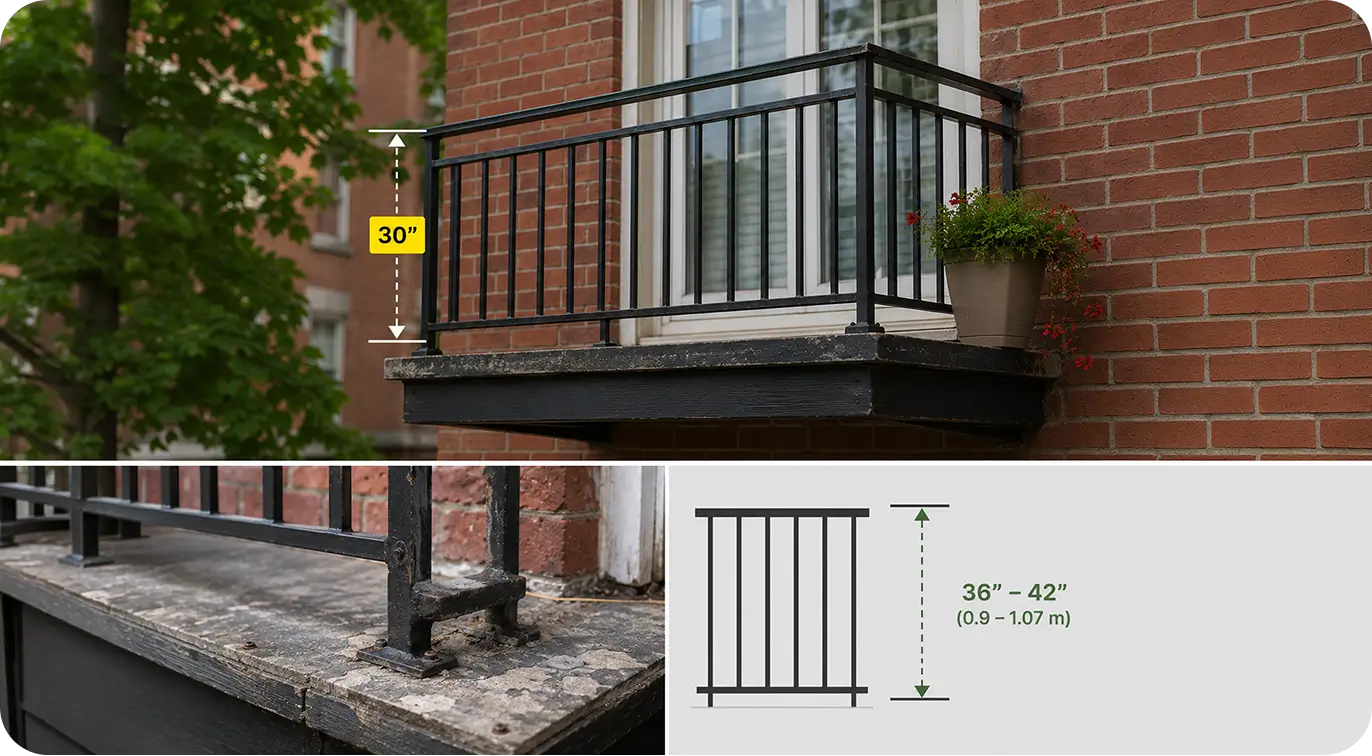
One important warning sign is a banister or railing that has begun to pull away from its anchors or connection points on the exterior brick wall. This detachment may be visible before structural sagging or sloping can be seen by the naked eye.

⚠️ Outdated Guardrail Heights

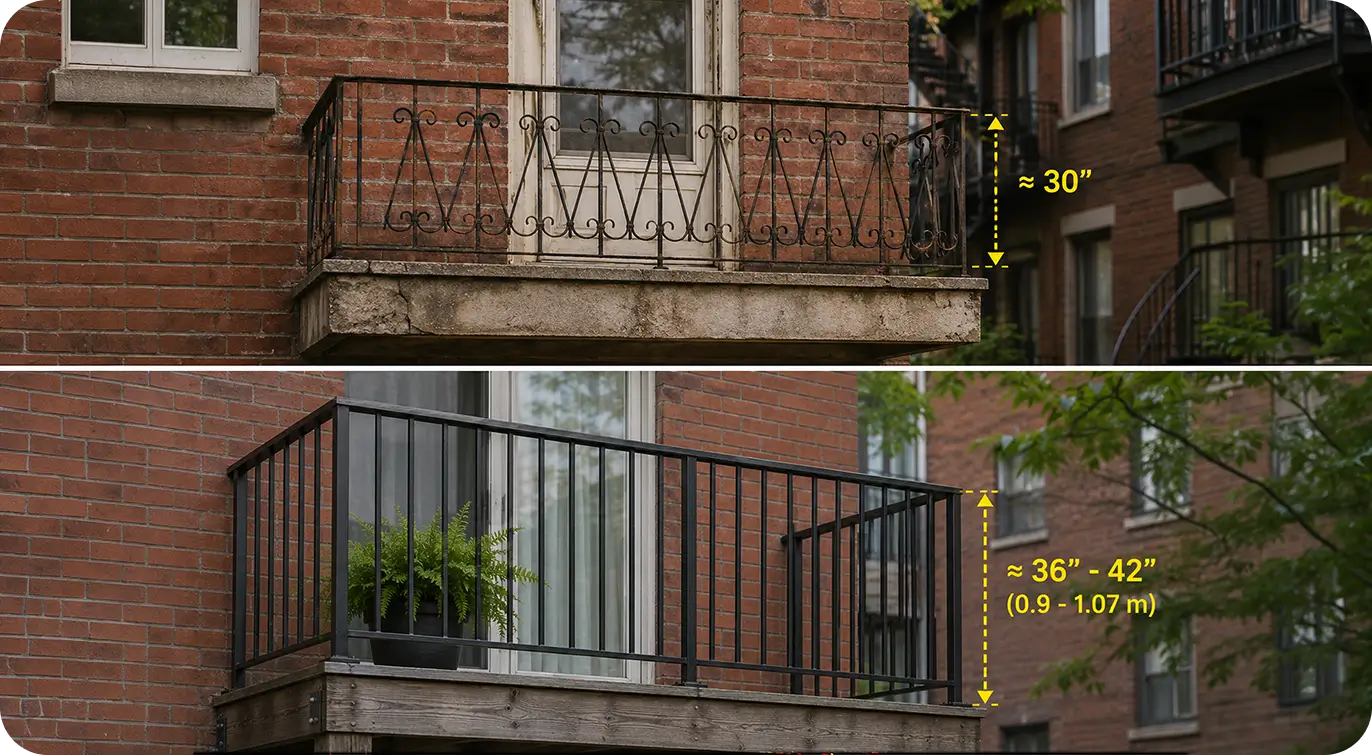
Older Montreal properties frequently feature legacy metal or wood railings as short as 30 inches. Current safety standards and building-code requirements often call for guardrails of approximately 36 to 42 inches (roughly 0.9 to 1.07 metres), depending on the height, use, and design of the platform. Railings that are much lower than current safety expectations may warrant further review, especially where children or guests use the balcony.

⚠️ Hazardous Baluster Spacing

Similar to safety standards for baby cribs, vertical balusters (spindles) should be spaced close together. As a general safety guideline, guardrail openings should be small enough to prevent a 4-inch / 100 mm object from passing through, helping reduce the risk of young children or pets slipping through.

Horizontal Guardrails and Climbing Risk

During a routine property evaluation, a Mose home inspector encountered a beautiful, custom-designed Art Deco balcony railing. The design featured horizontal steel cables spanning the perimeter of the platform.

While visually stunning, horizontal railings may make it easier for young children to climb.

Inspector’s Note:

While horizontal guardrails can be attractive, they may also make it easier for young children to climb. For elevated balconies, this is a safety concern worth reviewing, especially in older properties or custom-built installations. During the inspection, our team brought this issue to the homeowners’ attention so they could make an informed decision.

Protect Your Loved Ones: Get a Professional Assessment

It is better to review balcony safety before visible defects become more serious or before someone is injured. Whether you are purchasing an investment property in the city, preparing to sell a duplex, or performing seasonal maintenance, an objective visual evaluation by a qualified home inspector can help identify visible safety concerns and recommend next steps when further review is needed.

At Mose Home Inspection Services,

our bilingual inspectors have spent over 15 years evaluating the unique architectural elements of Greater Montreal, Laval, and the South Shore — providing trusted home inspection in Montreal for buyers, sellers, and homeowners alike. We review visible balcony supports, accessible connection points, signs of wood deterioration, and guardrail safety concerns to provide clear observations and practical recommendations. Curious what an inspection costs? Check our 2026 home inspection cost guide for current pricing.2026 home inspection cost guide
to generate an instant quote and secure your priority booking slot today.

Frequently Asked Questions (FAQ)

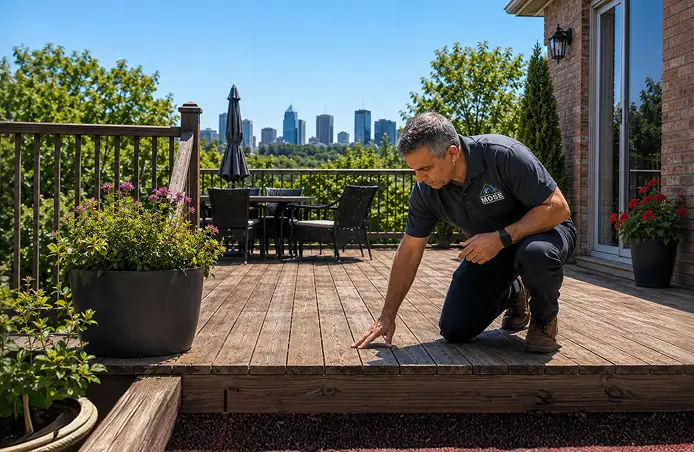
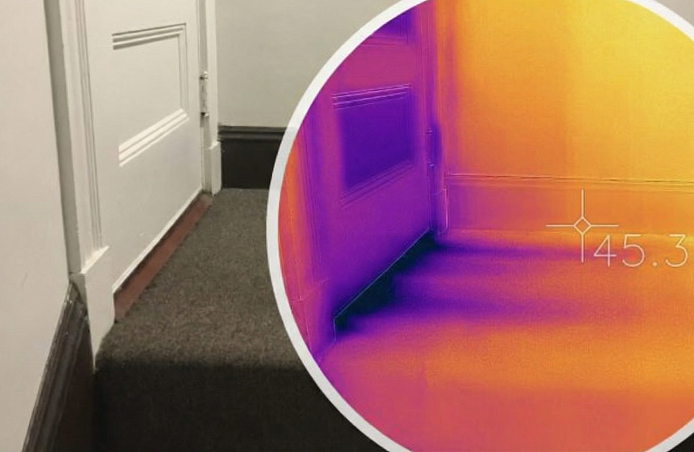
Inspectors look for external indicators of distress, including wood rot along the exposed beam, rust staining on masonry, or trim separation where the structure meets the brickwork. When appropriate and accessible, inspectors may use tools such as moisture meters or thermal imaging cameras to look for possible hidden moisture patterns. These tools can help identify possible moisture concerns without opening walls or ceilings, but concealed conditions cannot always be fully confirmed during a visual inspection.

Lower guardrails may be common in older buildings, but they can still create a safety concern, especially for children and guests. Whether an upgrade is legally required depends on the building, the work being done, and the applicable regulations. A qualified contractor, architect, engineer, or municipal authority can confirm compliance requirements. From a safety perspective, replacing low or unstable guardrails is often worth considering.

Yes, it can. If drainage is poor or waterproofing details have deteriorated, standing water may increase the risk of moisture damage below the surface. Over time, standing water may get past aging caulking or weak waterproofing details, soaking the wooden framing underneath and leading to rot, wood-destroying insect damage, or rusted iron supports.

Context

Insights & Tips for
Smart Homeowners