How to Choose an Unbiased Home Inspector in Montreal
The right inspector gives you facts, not fear — so you can decide with confidence, not pressure.

Ivan Mose
Founder and CEO, Certified
Master Inspector
How to Choose an Unbiased Home Inspector in Montreal: Beware the Soft & the Alarmist Inspector Alike
A true home inspection professional does not exist to make a deal go through at all costs, nor to blow it up. Their job is to deliver the unbiased, factual truth about a property’s condition so you can make decisions with complete confidence.
Let’s look at the hidden dangers of both extremes, examine why the alarmist approach is more seductive than it first appears, and identify the four key signs of a balanced, professional home inspector.
The Danger of the “Soft” Inspection
To understand why some inspections fall short, we have to look at the underlying business dynamics of the industry. A large percentage of home inspectors rely heavily on real estate agent referrals to keep their businesses alive. This creates a quiet but systemic conflict of interest: in an effort to keep referral networks happy and avoid “killing” transactions, some inspectors perform rushed walkthroughs or intentionally downplay significant, costly defects.
These “soft” pre-purchase home inspections are designed to keep deals together and protect the agent’s commission — but they leave the homebuyer holding the bag. Time and again, buyers express deep regret after hiring an inspector recommended by their agent, only to move in and discover serious problems that were glossed over or missed entirely during the assessment.
These missed issues are rarely cosmetic. Typical defects uncovered after a soft inspection include foundation failures, extensive wood rot, and completely collapsed underground sewer lines. By the time the buyer realizes they have purchased a money pit, the transaction is finalized — and they are left facing tens of thousands of dollars in unexpected repairs with very limited legal recourse.
Why Buyers Fall for the Alarmist Inspector
On the opposite end of the spectrum is the alarmist — an inspector who lacks professional perspective, treats minor wear-and-tear as an immediate catastrophe, and communicates entirely through a lens of fear.
At first glance, an alarmist might seem like the safest choice for a cautious buyer. Here is why that instinct is understandable, and why it leads buyers astray.
Why buyers are tempted: Alarmist inspectors often produce massive, 100-page home inspection reports packed with detail. For an anxious buyer, that sheer volume creates a comforting illusion of thoroughness — as if the inspector is working exceptionally hard to protect you.
Why it backfires: Those reports are typically chaotic, difficult to read, and saturated with red text and dramatic language like “terrible” or “awful.” Rather than helping you understand the property, they are loaded with excessive disclaimers and constant advice to “consult a specialist” — even for basic observations that any experienced, certified home inspector should be able to assess directly.
More critically, alarmist inspectors routinely overstep their professional scope by speculating about future failures and misdiagnosing minor issues as active hazards. Common examples include:
- Calling normal attic condensation caused by poor soffit venting a dangerous “toxic black mold” infestation
- Claiming a furnace heat exchanger is cracked when the unit simply has a loose flange
- Flagging “faulty and dangerous electrical wiring” in a room where a lightbulb had simply burned out
The result: unnecessary panic, damaged trust between buyers and sellers, and buyers walking away from perfectly viable homes over issues that would cost a few hundred dollars to address.
The Balanced Professional: How to Spot an Unbiased Home Inspector
The right home inspector — whether you are buying in Montreal, Laval, or Vaudreuil-Dorion — acts as a calm educator, not an instigator of panic or a deal-closer on anyone’s behalf.
It helps to remember that nearly every defect found during a home inspection can be repaired or remediated. The real question is the cost and timeline involved — a decision that belongs entirely to the buyer, not the inspector. A great inspector understands this boundary and communicates it clearly.
Here are the four pillars to look for when hiring an independent home inspector in the greater Montreal area:
The 4 Pillars of an Unbiased Inspection
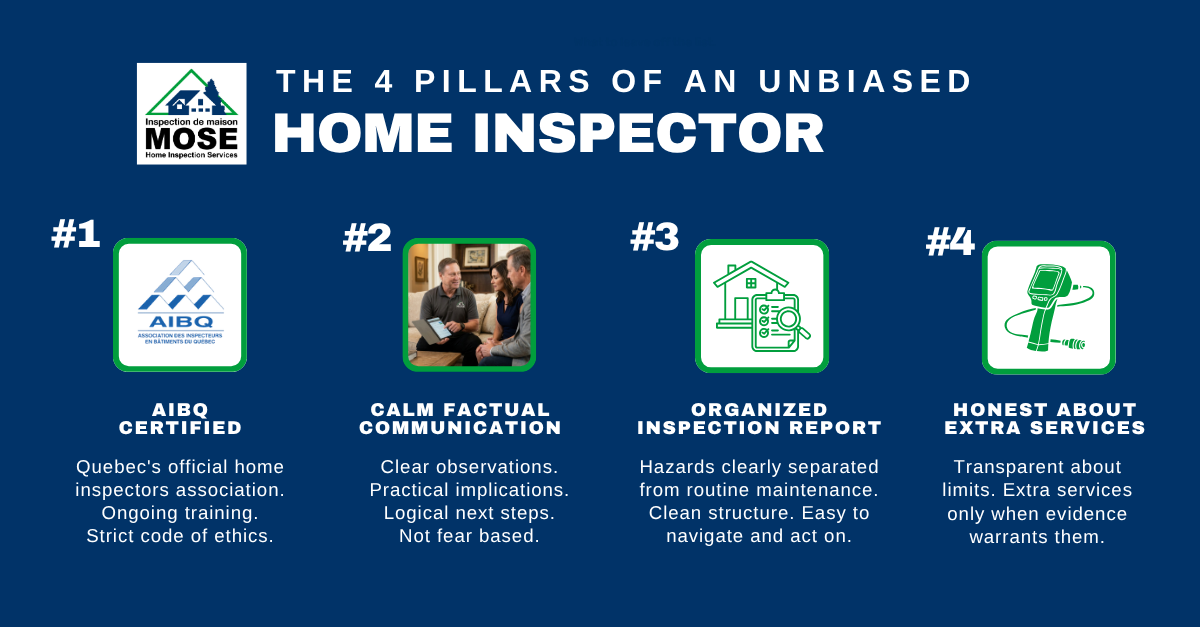
Pillar 1 – Active Professional Credentials:
Verify that the inspector is a certified, active member of a recognized national or provincial association, such as the American Society of Home Inspectors (ASHI), the International Association of Certified Home Inspectors (InterNACHI), or the Association des inspecteurs en bâtiments du Québec (AIBQ). Membership in these groups requires ongoing technical training, strict standards of practice, and adherence to a clear professional code of ethics.
Pillar 2 : Factual, Calm Communication
An exceptional home inspector translates complex building science into plain, objective language. They do not rely on dramatic adjectives or emotional framing. Instead, they clearly describe what they observed, explain its practical implications, communicate the level of urgency, and recommend logical next steps without speculation and without panic.
Pillar 3: A Well-Organized Inspection Report
Ask for a sample report before hiring. A professional home inspection report should be clean, well-structured, and easy to navigate. You should be able to immediately distinguish serious concerns active water infiltration, structural failures, hazardous electrical systems from routine maintenance items. If a sample report reads like a horror novel, keep looking.
Pillar 4: Honest Scope and Strategic Ancillary Services
A balanced inspector is transparent about the visual, non-invasive limitations of a standard home inspection. When physically warranted – not speculatively – they will recommend ancillary services such as a sewer scope inspection or thermal imaging inspection to give you a more complete picture of the property. These recommendations should be grounded in what they observed, never used as a fear tactic or a liability shield.
The Bottom Line
Your home inspection should protect you — not the deal. By choosing an independent, AIBQ-certified home inspector who values factual clarity over transaction pressure or fear-mongering, you gain a powerful ally in one of the biggest financial decisions of your life.
Whether you are buying in Montreal, Laval, or Vaudreuil-Dorion, don’t settle for a soft inspector who glosses over the truth or an alarmist who exaggerates it. Look for the calm, detailed voice of a seasoned professional.
🏡 Wondering what happens when a serious defect gets missed entirely? Read our article on vices cachés (hidden defects) in Quebec real estate — and why understanding your legal rights before you sign could save you thousands.
🔧 Once defects are on the table, negotiation begins. Read our guide on how to manage repairs without losing the sale — practical strategies for buyers and sellers to reach a fair resolution and keep the deal moving forward.