
How to Manage Repairs Without Losing the Sale
Got a long list of repair requests after your home inspection? Learn which items are worth negotiating and which to let go, so you protect your investment without losing the deal.

Ivan Mose
Founder and CEO, Certified
Master Inspector

Title: Navigating the “Laundry List”
Your home inspection report just landed in your inbox, and it is long. Item after item, page after page, it can feel like the house has more problems than you expected. Before you panic or send the seller a laundry list of every note in the report, take a breath. Not every item on that list needs to become a negotiating point.
A good inspection report covers everything the inspector could see, from a loose cabinet hinge to a cracked foundation wall. That range is exactly the point. An inspection is meant to give you a full picture of the home’s condition, not a checklist of complaints. The real skill in a repair negotiation is knowing which items matter and which ones do not.
Focus on What Really Matters
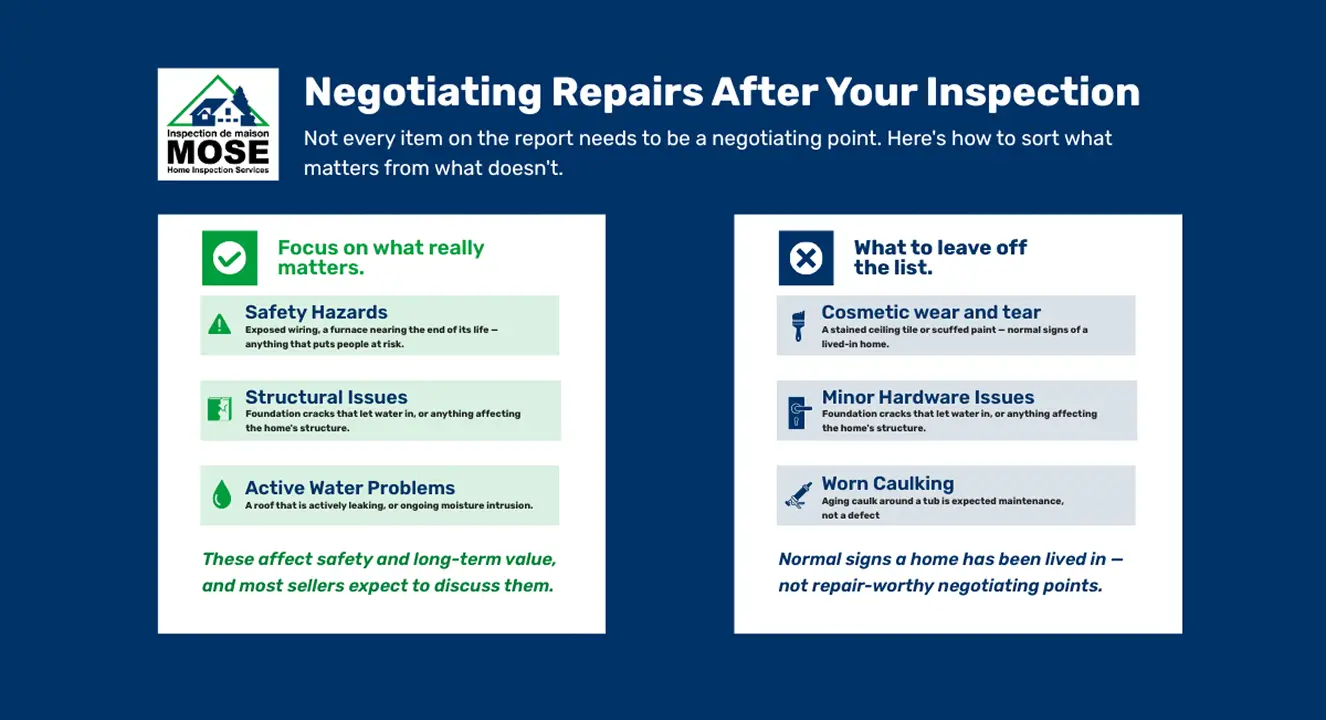
Put your attention on three categories: safety hazards, structural issues, and active water problems. Think exposed wiring, a furnace showing signs of significant wear or age, foundation cracks that let water in, or a roof that is actively leaking.
These are the items that matter most — and that sellers generally expect to discuss.
What to Leave Off the List
Cosmetic wear and tear rarely belongs on a repair request. A stained ceiling tile, a loose doorknob, or worn caulking around a tub are normal signs that a home has been lived in.
Sending a seller a request that reads like a to-do list for the whole house can slow down, or even sink, a deal both sides want to close.
How to Ask for What You Need
Once you know what matters, decide how you want to ask for it. You generally have three options: ask the seller to complete repairs before closing, request a credit at closing so you can handle the work yourself, or ask for a price reduction.
Many buyers prefer a credit, since it keeps control of the repair quality in their own hands and avoids a rushed fix from the seller.
If You Are the Seller
A long list of requests can feel discouraging. Try not to take it personally. Review each item with your real estate broker, decide which ones are reasonable given the home’s price and condition, and respond with a clear counteroffer. A calm, specific response keeps the conversation moving instead of stalling it.
Quick Tips for a Smoother Negotiation
Follow these tips to avoid problems:
- Sort every item into one of three categories first: safety, structural, or moisture.
- Get a rough repair-cost estimate before requesting a credit so your number is realistic.
- Keep requests specific. For example, “Repair the leaking pipe under the kitchen sink” is clearer than “Fix plumbing issues.”
- Expect some back and forth. Most negotiations settle after one or two rounds.
- Include your real estate broker. They can help determine what is reasonable for your market.
The Bottom Line
Whether you are buying or selling, the goal of a repair negotiation is not to win every point. It is to reach an agreement that reflects the home’s true condition and keeps both sides comfortable moving forward.
A thorough home inspection that Montreal buyers and sellers can rely on is the foundation of a fair negotiation.
At Mose Home Inspection Services, reports are clear, detailed, and designed to help you make confident decisions, whichever side of the table you are on. Contact the company to book an inspection and get the clarity you need before negotiating.
Disclaimer: This article is intended for general informational purposes only. Mose Home Inspection Services does not provide repair cost estimates, contractor recommendations, or opinions on the financial terms of any real estate transaction. All inspection services are conducted in accordance with recognized Quebec standards of practice (APCHQ, AIBQ, BNQ 3009-500). For repair pricing and contractor selection, consult a licensed professional in the relevant trade.
Are you a real estate broker looking for a reliable inspection partner or an educational presentation for your team? Contact Mose Home Inspection Services to learn more about our buyer inspections, pre-listing inspections, and broker education sessions.